
The Apostles’ Creed next proclaims that Jesus Christ was conceived by the Holy Spirit. These simple words invite us into one of the quietest and most beautiful mysteries of the Christian faith. Before Jesus preached, healed, gathered disciples, or offered himself upon the Cross, he first dwelt unseen within the womb of Mary. Before the world recognized its Savior, God was already at work in hiddenness.
The Gospel of Luke tells us that the angel Gabriel announced to Mary that the Holy Spirit would come upon her and that the power of the Most High would overshadow her. This was not merely the beginning of a pregnancy. It was the moment when the eternal Son of God entered fully into human history. The Creator took on the life of a creature, and the One through whom all things were made began life as every human life begins—hidden, vulnerable, and utterly dependent. The Incarnation began not with public proclamation, but with the quiet work of the Holy Spirit.
There is something deeply revealing about the way God chose to enter the world. Throughout Scripture, God often works quietly before he works visibly. Seeds first take root beneath the soil before they break through the earth. Dawn begins long before the sun rises above the horizon. The prophets spoke for centuries before Christ appeared. In the same way, the salvation of the world began in the hidden silence of Mary’s womb, where the Holy Spirit was already bringing forth new life. God’s greatest works are often those that begin unseen.
As Christians, we sometimes expect God to move through dramatic miracles or unmistakable signs. Yet the mystery of the Incarnation reminds us that the Holy Spirit frequently works through quiet faithfulness. For many months, no one could see what God was accomplishing within Mary. She carried within herself the hope of the world while continuing to live what, from the outside, appeared to be an ordinary life. The greatest gift ever given to humanity was growing in silence, patiently and almost unnoticed.
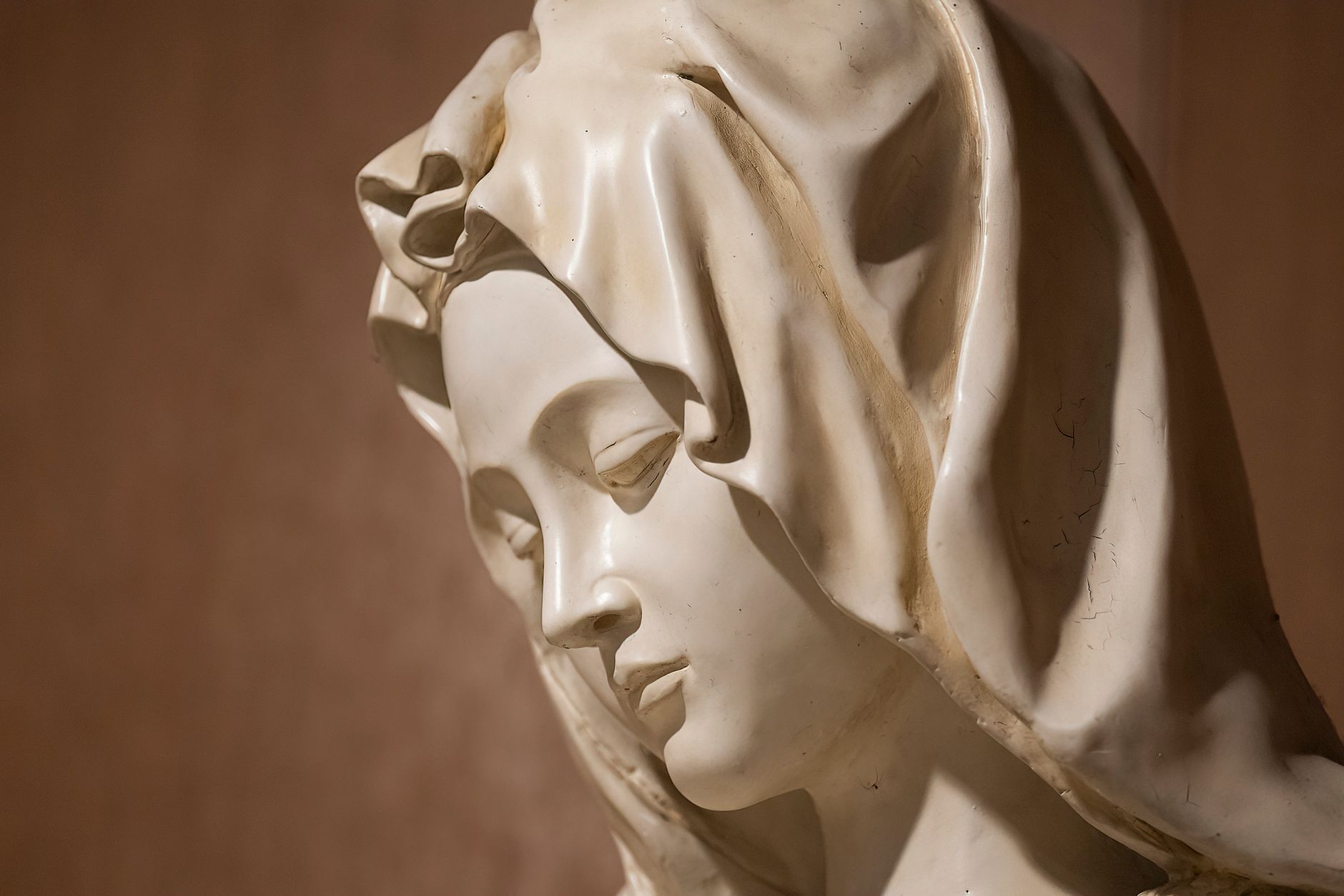
Mary herself becomes an image of the receptive heart. She did not create the mystery growing within her; she received it. She trusted what she could not yet fully understand and allowed God’s work to unfold according to God’s own wisdom and timing. Her life reminds us that faith is often less about controlling God’s plan than about making room for God’s presence. The Holy Spirit asks not first for our strength or certainty, but for our willingness to say with Mary, “Let it be with me according to your word.”
Although Christ was conceived within Mary in a unique and unrepeatable way, the mystery of new life continues in every Christian through baptism. Jesus taught that we must be “born of water and the Spirit,” for baptism marks the beginning of a new creation within us. Just as the Holy Spirit overshadowed Mary and brought forth the life of Christ, so the Holy Spirit comes to dwell within us through baptism, planting within our hearts the life of Christ himself. Baptism is not simply a ceremony of welcome into the Church. It is the beginning of a lifelong transformation in which God gradually conforms us to the image of his Son.
Like any new life, this work of the Spirit unfolds slowly. It grows through prayer, worship, the sacraments, repentance, acts of charity, and countless ordinary moments of faithfulness. There are seasons when we clearly perceive God’s presence and seasons when his work seems hidden from us. Yet just as Christ continued to grow within Mary day by day, often beyond the sight of others, so the Holy Spirit quietly forms Christ within every baptized believer. St. Paul speaks of “Christ being formed” within us, reminding us that the Christian life is not merely about believing certain truths but about allowing the very life of Christ to take root, mature, and bear fruit within our own lives.
Perhaps this is one of the greatest invitations hidden within the Creed. When we confess that Jesus was conceived by the Holy Spirit, we are reminded that God still works in much the same way. He often begins with what appears small, hidden, and fragile. A growing desire to pray, the courage to forgive, a deeper compassion for another person, a quiet conviction to change our lives, or an unexpected peace during a difficult season may seem insignificant in the moment. Yet these are often the gentle movements of the Holy Spirit, nurturing the life of Christ within us.
To confess that Jesus was conceived by the Holy Spirit is therefore to proclaim that salvation begins with God’s initiative and continues through God’s grace. The same Spirit who overshadowed Mary continues to overshadow the Church, giving birth to new life in every generation. The mystery that began in Nazareth is not simply an event to remember; it is a pattern for the Christian life. God still enters the world quietly. He still brings life where there was none. He still forms Christ within those who open themselves to his presence, until, little by little, the life of Jesus becomes visible in our own.
Questions for Reflection
- Can you identify times when God was quietly at work in your life before you fully recognized it?
- What does your baptism mean to you today, beyond the day it was celebrated?
- In what ways have you seen the life of Christ gradually growing within you over the years?
- What can Mary’s openness teach you about trusting God’s work before you fully understand it?
- Are there places where you are resisting the quiet work of the Holy Spirit within your heart?
- Spend a few moments in prayer thanking God for the gift of your baptism. Ask the Holy Spirit to continue forming the life of Christ within you, just as he first formed Christ within Mary, so that your own life may increasingly reflect the love of Jesus to the world.