
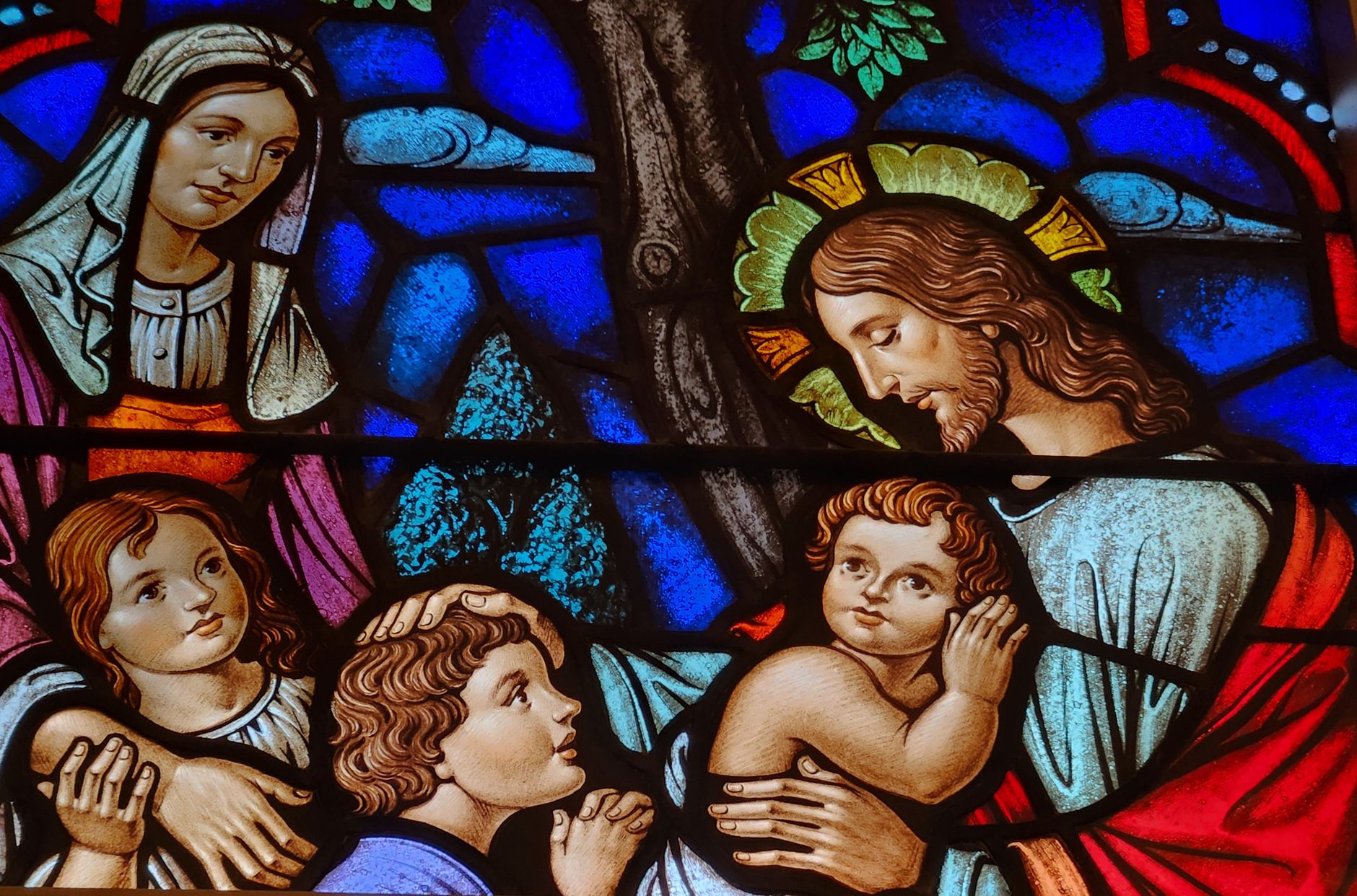
The Apostles’ Creed next proclaims that Christ will come again to judge the living and the dead. For many people, the word judgment immediately awakens fear. We imagine standing before a distant judge whose purpose is to condemn us, exposing every failure and every weakness. Yet this is not the image the Creed gives us. The One who comes to judge the world is not a stranger. He is the same Jesus who was born of Mary, walked among the poor, touched lepers, forgave sinners, wept beside the tomb of Lazarus, suffered upon the Cross, descended into death itself, and rose again in glory. The Judge of all humanity is the One who has already shown us the fullness of God’s compassion.
Jesus is uniquely able to judge because he knows the human heart from the inside. He knows what it is to be hungry, weary, misunderstood, betrayed, tempted, rejected, and sorrowful. He understands the burdens we carry, the wounds we hide, the fears that shape our decisions, and the struggles that no one else can see. There is nothing about our humanity that is foreign to him. His judgment is therefore never detached or impersonal. It is the judgment of One who has walked our path, shared our humanity, and loved us through every step of it.
Throughout the Gospels, Jesus consistently looked beyond outward appearances into the heart. He saw faith where others saw failure. He saw generosity in the widow’s small offering. He saw the desire for healing beneath the shame of sinners. He saw potential in fishermen, tax collectors, and ordinary people whom the world overlooked. Again and again, Christ revealed that God’s judgment is deeper than human judgment because God sees not only what we have done, but who we are, what has shaped us, and who we are capable of becoming through grace.
This does not mean that judgment is unimportant or that our choices have no consequence. Love always reveals the truth. When Christ comes again, everything will be brought into the light. Every act of compassion, every hidden kindness, every injustice, every wound, every selfish choice, and every faithful sacrifice will be seen as it truly is. Nothing will remain hidden, not because God delights in exposing us, but because healing begins with truth. Just as a physician must first uncover a wound before it can be healed, so Christ reveals our lives as they truly are in order to complete the work of redemption.
The final judgment is therefore not the triumph of wrath but the triumph of truth and love. Every lie will give way to truth. Every injustice will be answered with perfect justice. Every tear will be acknowledged. Every act of mercy will be remembered. Nothing done in love will ever be forgotten, because love alone belongs to God’s eternal kingdom.
This promise also offers hope to those who have suffered. We live in a world where many wrongs seem never to be made right. The innocent suffer, the powerful often escape accountability, and goodness is not always rewarded in this life. The promise that Christ will judge the living and the dead assures us that history is not governed by chaos or chance. The One who reigns at the Father’s right hand is also the One who will finally set all things right. His judgment is not revenge but restoration. It is the healing of creation according to the perfect justice and mercy of God.
Because we know the Judge, Christians need not await that day with terror. We await it with hope. Every time we have encountered Christ in the Gospels, we have encountered mercy. Every time we have watched him respond to broken humanity, we have seen compassion. Even when he challenged others, he did so in order to restore rather than to destroy. The Christ who will welcome us at the end of our lives is the same Christ who has been walking beside us throughout them.
To confess that Christ will come again to judge the living and the dead is therefore to place our confidence not in our own perfection, but in the perfect love of the One who knows us completely. He sees every joy and every sorrow, every virtue and every weakness, every victory and every failure. He knows the story behind every scar and the longing beneath every prayer. His judgment is perfect because his knowledge is perfect, and his knowledge is perfect because his love is perfect. The final word over creation will not belong to sin or death, but to the compassionate Christ, whose deepest desire has always been to bring his children home.
Questions for Reflection
- How does it change your understanding of judgment to know that your Judge is Jesus, who fully understands the human heart?
- Are there parts of your life that you fear bringing into God’s light? What would it mean to trust Christ with them?
- How have you experienced Christ looking beyond your failures to see the deeper truth of who you are?
- In what ways does God’s promise to set all things right give you hope in the face of injustice?
- How can you become less judgmental of others, remembering that only Christ fully knows the heart?
- Spend a few moments imagining yourself standing before Christ. Rather than seeing a stranger, picture the same compassionate face that welcomed children, forgave sinners, healed the broken, and stretched out his arms upon the Cross. Ask for the grace to live each day in the peace of knowing that your life rests in the hands of the One who knows you completely and loves you perfectly.